AI Hiring Automation for HR Consultancies
This project falls within the rapidly growing HR Technology sector, specifically focused on AI Hiring Automation and recruitment workflow optimization. The platform was designed for organizations that manage high volumes of candidates
Project Overview
Industry
HR TechnologyHR Tech
AI Powered Hiring Platform
Project Type
Recruitment AutomationRecruitment Automation
Intelligent resume analysis, automated candidate screening, recruiter workflow automation
Engagement
End-to-End ProductEnd-to-End Product
Product Architecture, Platform Design, AI Engineering and End-to-End Product Delivery
Recruitment is fundamentally a human business – but the operational workflows that support hiring are often repetitive, manual, and inefficient. Staffing agencies and HR consultancies today face an increasingly complex hiring environment. Open roles receive hundreds of applications, recruiters spend hours reviewing resumes, and early screening calls consume a large portion of the recruiter’s day. Despite modern recruitment tools, the early stages of hiring remain largely manual. ThinkJS partnered on the engineering of an AI-powered hiring automation platform designed to transform how recruitment teams handle candidate screening and shortlisting.
The result was Evality.ai, an AI-driven recruitment intelligence system that automates resume evaluation, candidate pre-screening conversations, and recruiter workflow coordination. Rather than replacing recruiters, the system focuses on removing the most time-consuming parts of hiring so that recruiters can focus on meaningful conversations and better candidate evaluation.
The platform introduces AI automation into the earliest stages of hiring, allowing recruitment teams to move from manual screening to intelligent candidate prioritization. The outcome is a recruitment workflow where the right candidates surface faster, recruiters spend less time on repetitive work, and hiring decisions can happen sooner.
The Hiring challenge
Recruiters today face a paradox. There are more resumes available than ever before, yet identifying the right candidate still requires significant manual effort. A typical recruiter workflow involves reviewing hundreds of resumes, calling candidates to validate basic information, coordinating interview schedules, and tracking candidate status across multiple systems.
This results in several operational challenges.
- Resume Overload – Every open role attracts a large number of applicants, many of whom may not match the role requirements. Recruiters spend hours manually reviewing profiles to identify relevant candidates.
- Repetitive Screening Calls – Initial screening calls often involve asking the same set of questions repeatedly to verify candidate information and assess basic fit.
- Candidate Drop-Offs – Candidates frequently miss calls, delay responses, or become unavailable during the screening process, resulting in wasted recruiter effort.
- Lack of Intent Signals – Traditional hiring tools rely heavily on resume keywords but provide little insight into candidate intent, communication ability, or availability.
The result is slower hiring cycles, recruiter fatigue, and missed opportunities to place the right candidates quickly. Recruiters end up spending more time managing processes than evaluating talent.
The thinkJS Approach
ThinkJS approached the problem by focusing on recruiter productivity as the core design principle. Instead of attempting to automate the entire hiring process, the engineering effort focused on automating the most repetitive and time-consuming parts of recruiter workflows.
These include:
- resume screening
- candidate outreach
- early-stage screening calls
- candidate intent validation
By introducing AI automation at these stages, recruiters could dramatically reduce operational workload while still maintaining full control over hiring decisions. The system was also designed to integrate easily with existing hiring workflows rather than requiring companies to adopt new ATS systems. This allowed recruitment teams to adopt the platform quickly without disrupting their existing processes.
Solution Delivered
ThinkJS engineered a complete AI-driven hiring automation system capable of evaluating candidates, conducting screening conversations, and presenting recruiters with high-quality shortlists.
The platform includes several core capabilities.
AI Resume Intelligence
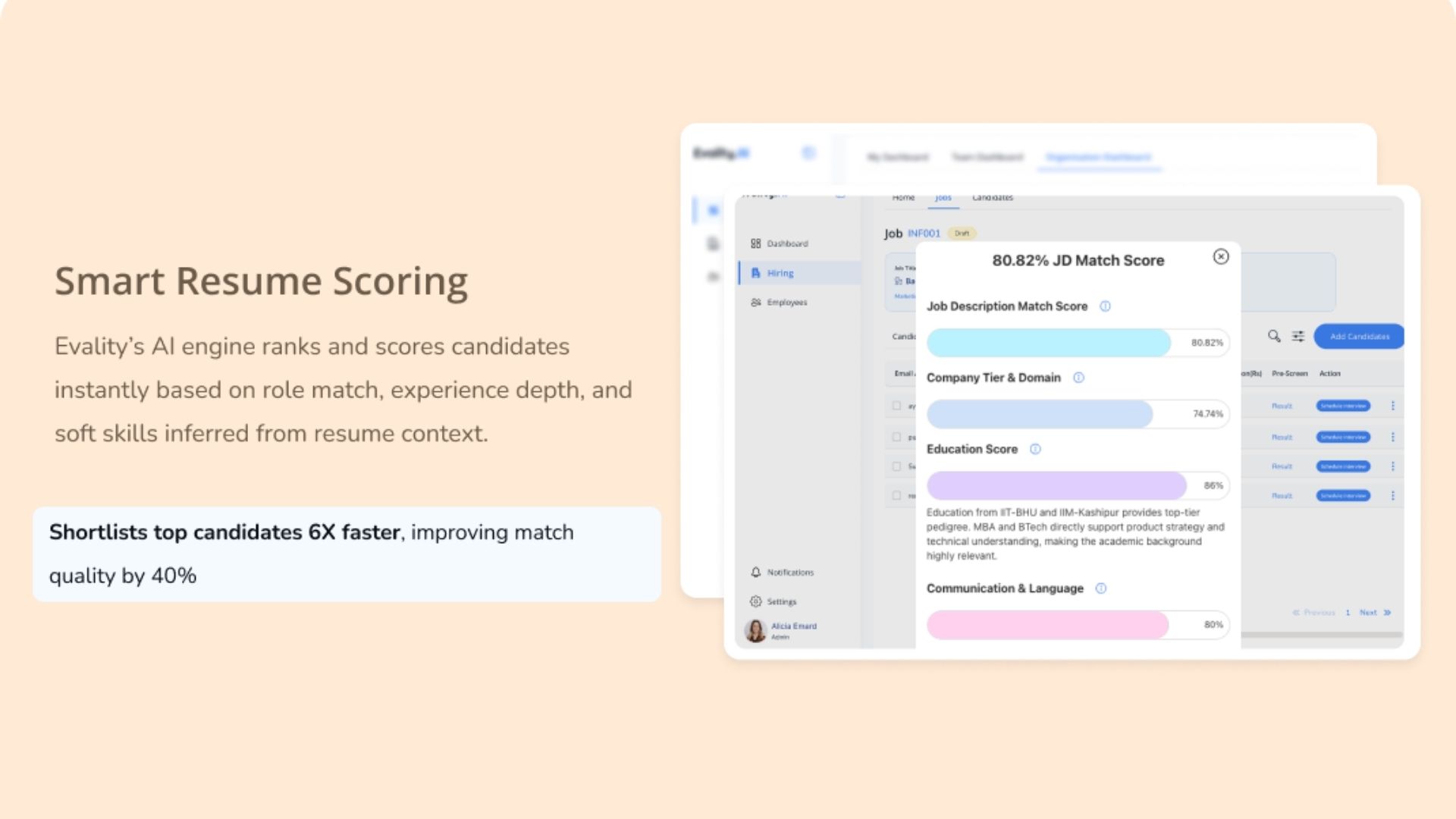
The system evaluates incoming resumes against job requirements using a multi-dimensional scoring model. Candidates are evaluated based on factors such as:
- skill relevance
- experience depth
- tenure stability
- industry similarity
- role alignment
This ensures recruiters immediately see the most relevant candidates for a role.
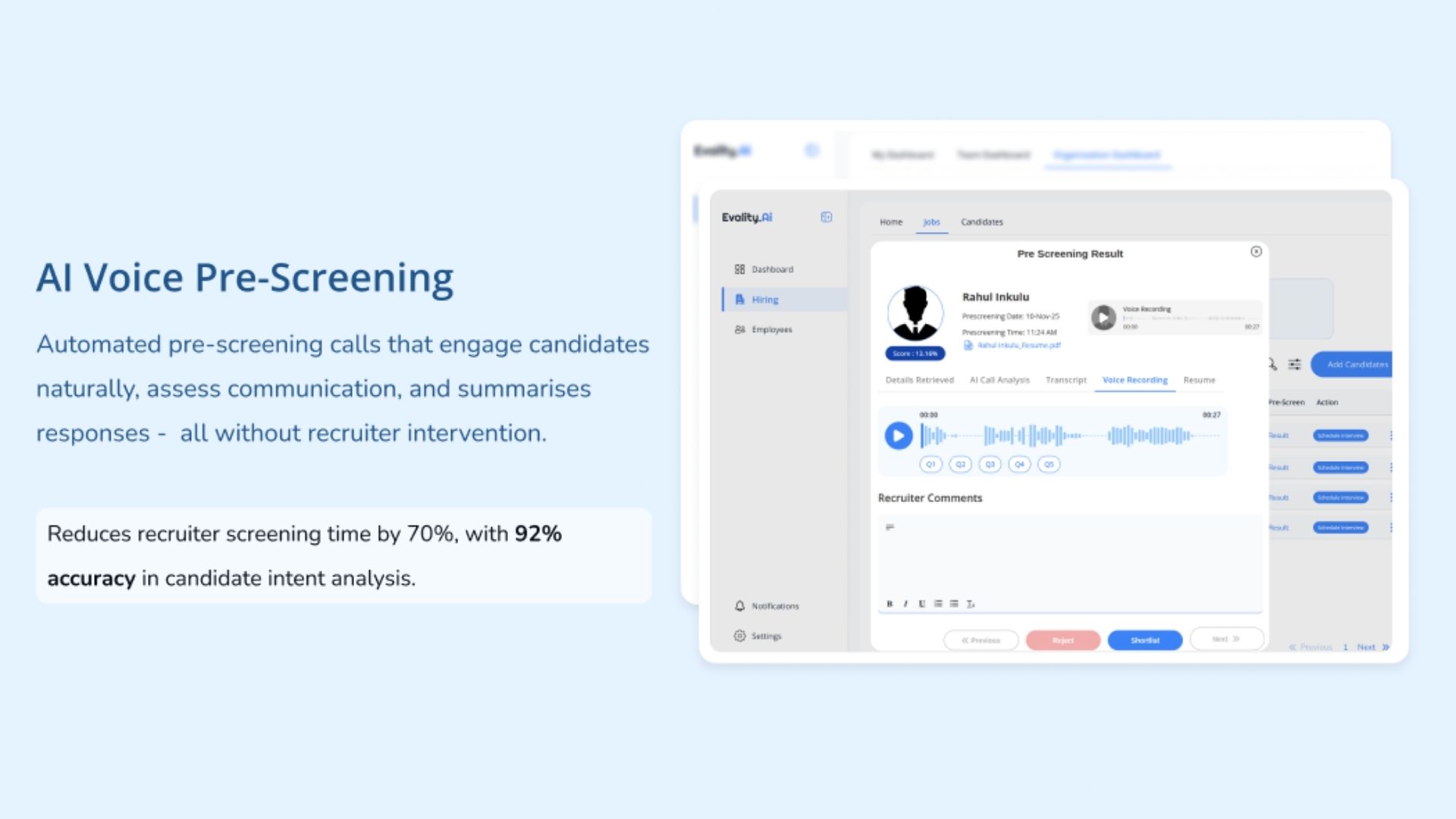
AI Candidate Pre-Screening Calls
Instead of recruiters manually calling each candidate, the system conducts automated screening calls using conversational AI. During these conversations the platform verifies:
- candidate interest in the role
- communication clarity
- experience details
- availability and joining intent
Recruiters receive structured summaries of each conversation. This dramatically reduces the time recruiters spend on repetitive phone calls.
Candidate Intent Signals
One of the major challenges in hiring is identifying whether candidates are genuinely interested in the role. The platform captures signals such as:
- willingness to proceed
- availability for interviews
- expected salary range
- communication quality
These insights significantly improve candidate relevance during shortlisting.
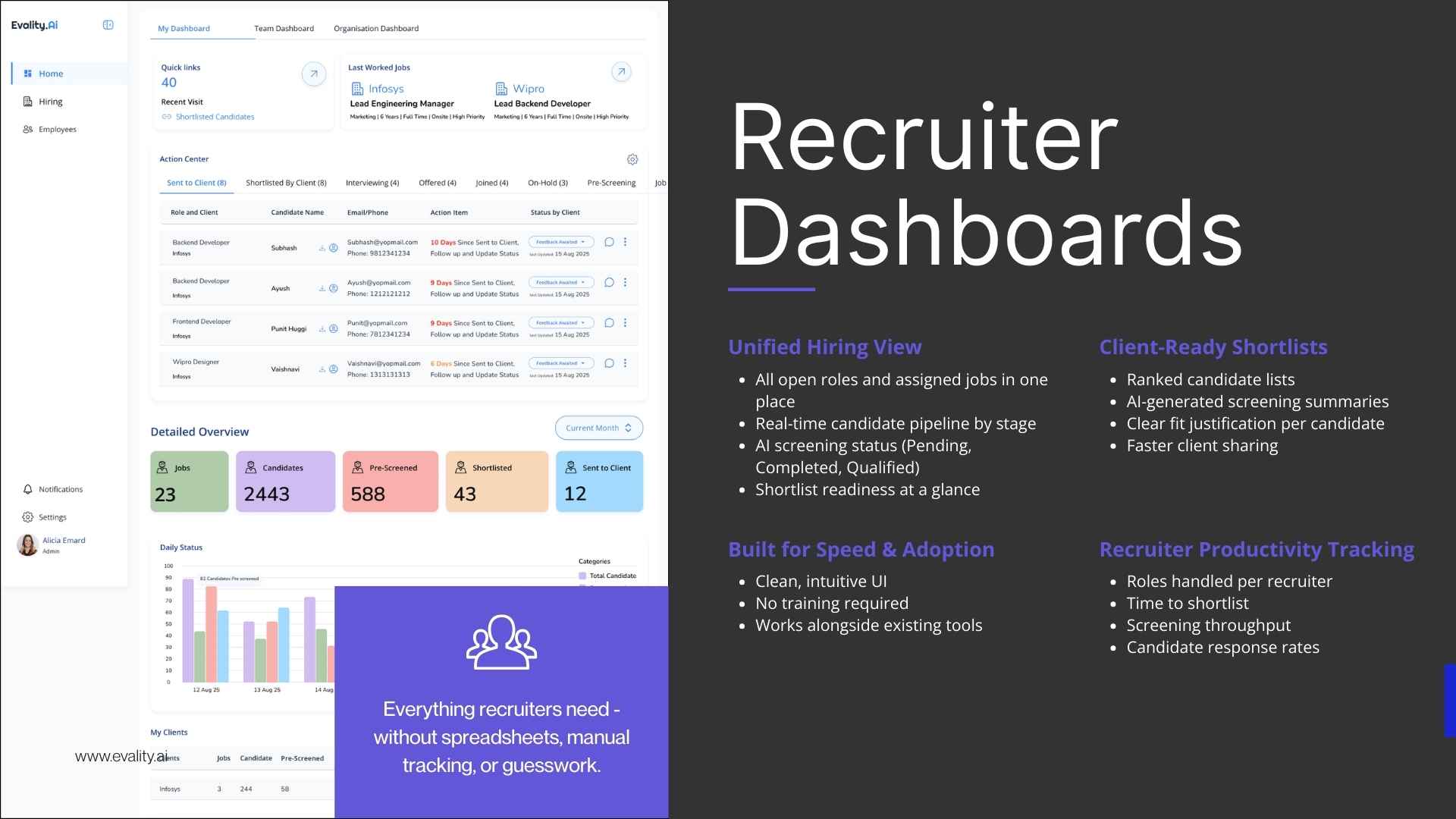
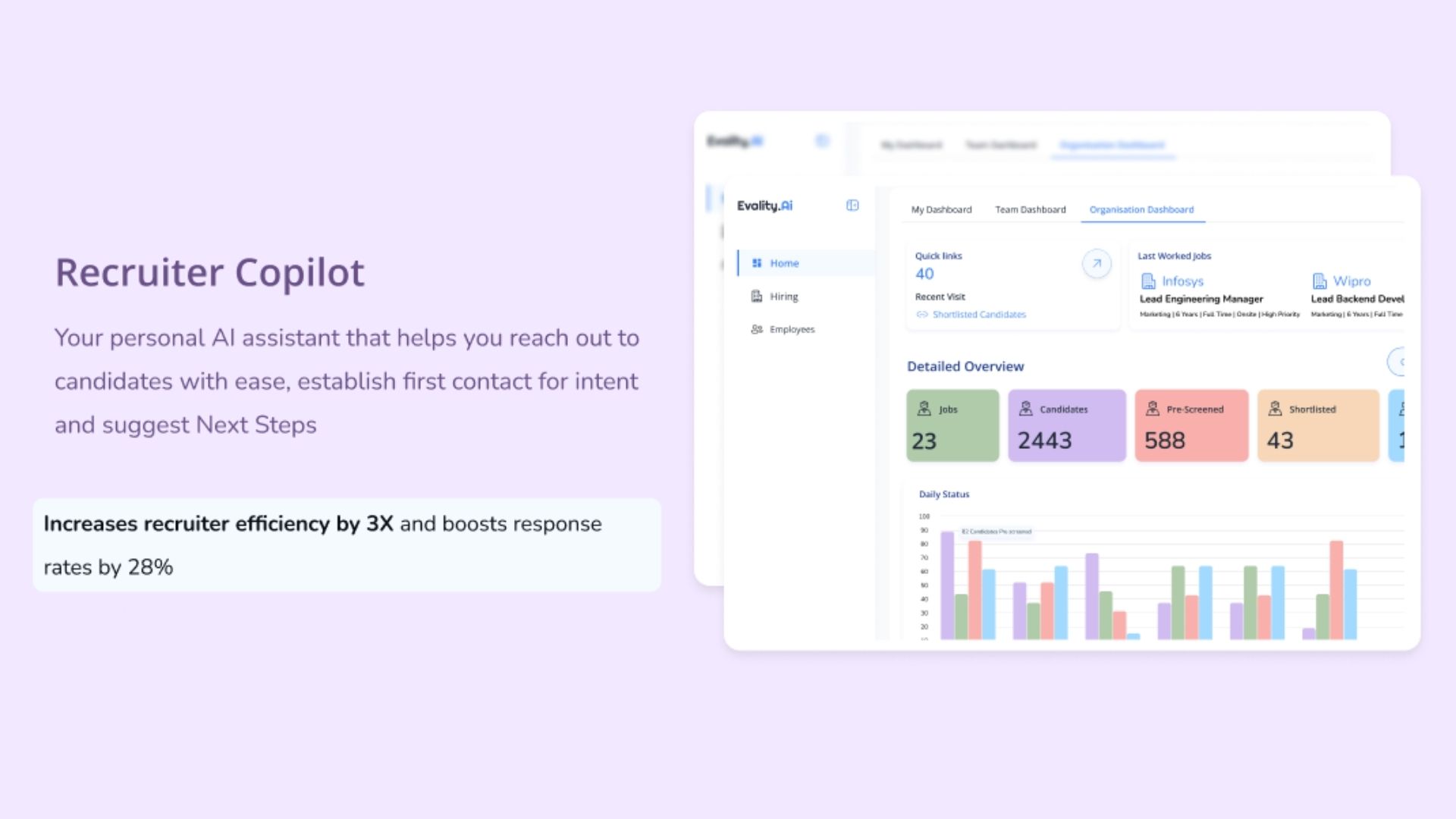
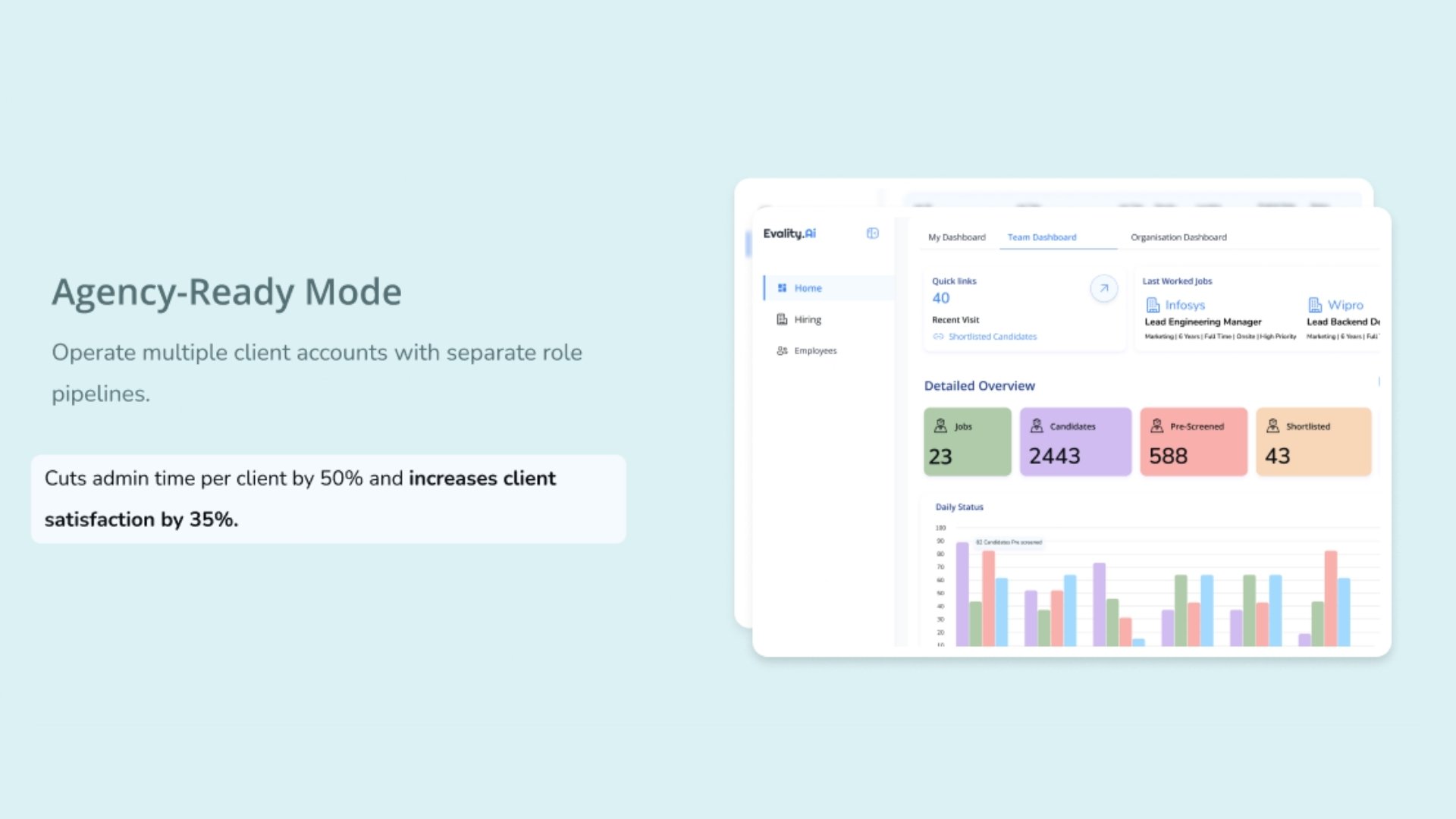
Recruiter Productivity Dashboard
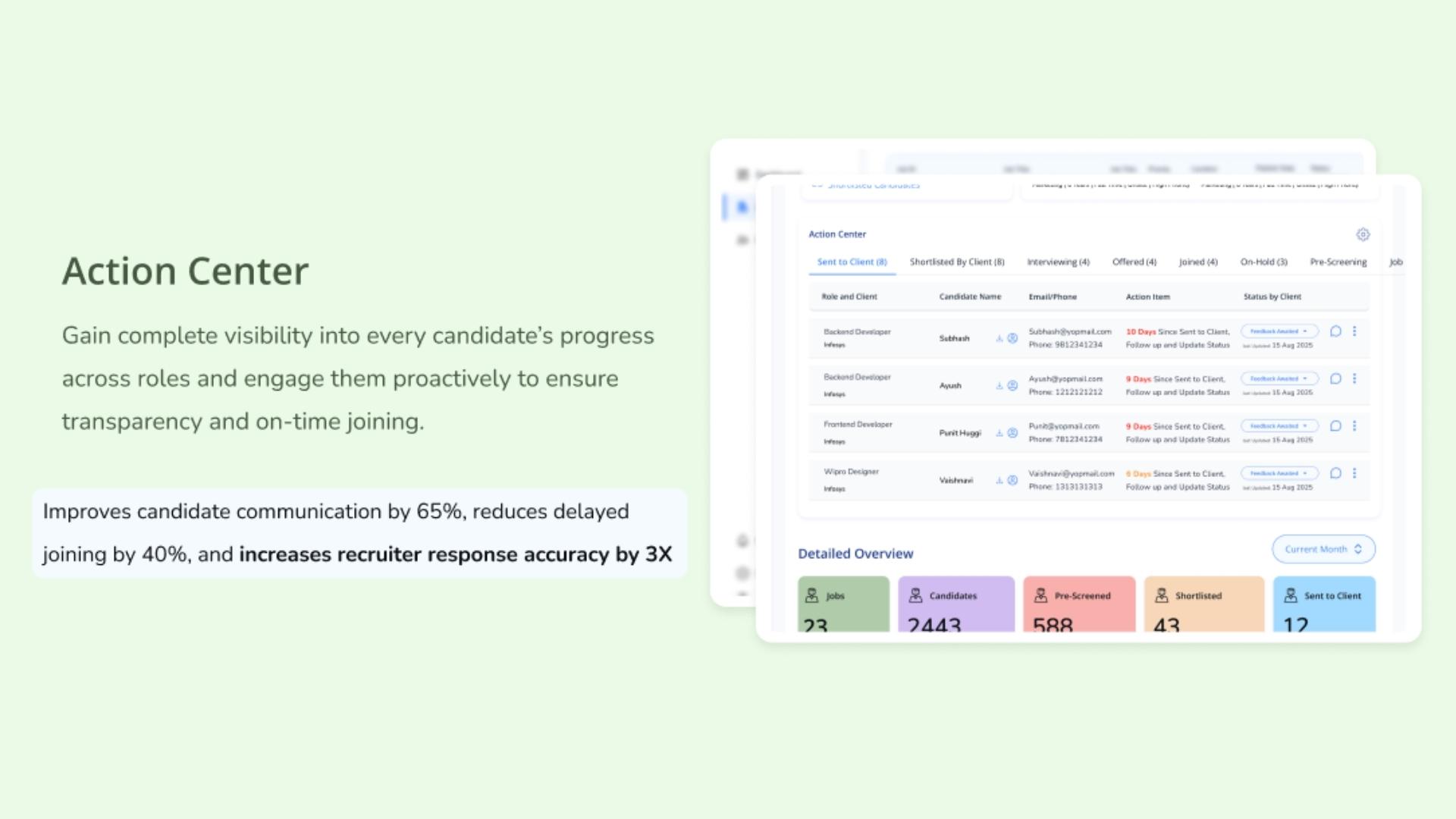
The system provides recruiters with a unified interface that shows:
- candidate pipeline stages
- Action Center for Agencies
- recruiter productivity metrics
Recruiters can manage multiple hiring roles without relying on spreadsheets or manual tracking.
One-Day Onboarding
The platform was engineered for rapid adoption. Organizations can:
- create job roles
- upload candidate resumes
- start AI screening
within a single day. This ensures immediate productivity improvements without long implementation cycles.
Engineering Highlights
This project demonstrates ThinkJS capability in building high-impact AI systems that balance performance with cost efficiency.
- Cost Optimized AI Infrastructure
- High-volume AI systems can quickly become expensive if not engineered correctly.
- ThinkJS implemented a cost-efficient architecture that allows the platform to conduct large volumes of AI screening calls while maintaining low operational costs.
- This makes the platform one of the most affordable AI pre-screening solutions available for HR consultancies.
- Multi-Dimensional Candidate Scoring
- Instead of relying on simple keyword matching, the platform evaluates candidates using a weighted scoring algorithm that considers multiple hiring signals.
- This improves the accuracy of candidate ranking and reduces recruiter effort.
- Conversational AI Integration
- The AI screening system was engineered to conduct structured conversations with candidates while capturing responses in a format that recruiters can easily review.
- Intelligent Fallback & Call Rescheduling
- The conversational AI system was engineered to account for real-world candidate availability and response behavior.
- If a candidate is unavailable during the initial screening attempt, the platform intelligently offers alternate time slots and automatically reschedules the screening call based on the candidate’s preferred time.
- This ensures that candidate engagement continues without requiring recruiter intervention.
- By handling call retries and scheduling dynamically, the system significantly reduces missed screening opportunities and eliminates one of the most common frustrations in recruitment workflows – candidate ghosting during early screening stages.
- Recruiter-Centric Design
- Every feature in the platform was designed around improving recruiter efficiency rather than adding administrative complexity.
- The result is a product that recruiters can adopt quickly without training.
Impact
Organizations using the platform have seen measurable improvements in hiring efficiency.
- Faster Candidate Shortlisting – Hiring teams can move from resume review to candidate shortlisting significantly faster.
- Reduced Recruiter Workload – AI automation reduces the amount of time recruiters spend on resume screening and initial calls.
- Improved Candidate Relevance – Candidates reaching interview stages are more likely to match role requirements and demonstrate genuine interest.
- Higher Candidate Engagement – One of the major operational improvements came from the system’s ability to intelligently handle candidate availability. If a candidate is unavailable during the initial screening attempt, the platform automatically offers alternate time slots and reschedules the call based on the candidate’s preference.
- Recruiter Productivity Gains – Recruiters are able to manage significantly more roles simultaneously, improving overall hiring throughput. In many cases, recruiter productivity improves by up to 6x to 10x when AI automates the early stages of hiring.
Hiring is ultimately about human judgment and relationship building. By automating repetitive operational tasks, AI systems like Evality.ai allow recruiters to focus on what they do best – evaluating talent and building meaningful professional connections.
Looking to Build AI into your hiring workflow?
Recruitment is evolving rapidly, and AI is becoming a critical advantage for organizations that need to hire faster without increasing operational workload. Platforms like the one described in this project demonstrate how thoughtful AI engineering can automate repetitive hiring tasks while improving recruiter productivity and candidate quality.
At ThinkJS, we work closely with product teams, HR platforms, and recruitment consultancies to design and engineer AI-powered systems that deliver real business outcomes — not just experimental features.
If your organization is exploring AI-driven hiring automation, recruitment intelligence platforms, or workflow automation for HR teams, our team can help translate your product vision into scalable, cost-efficient AI systems.
Product Thinking - Platform Engineering - AI implementation